


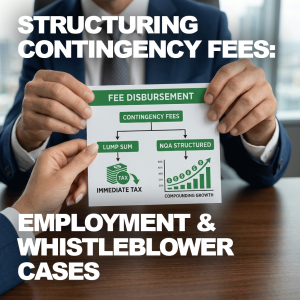
 The amount of contingency fees generated from the settlement of an employment or whistleblower case can be significant. So can the tax burden. Structuring your fees can help ease the tax burden while creating long-term financial security.
Lawyers receive their contingency fees in two ways:
- In a lump sum; taxes are immediately due on the full amount.
- Fees are structured through a Non-Qualified Assignment (NQA) structure; taxes are owed only as funds are received in future, guaranteed payments.
Benefits of a NQA structure:
- The funds remain in the structure, growing with compounding, tax-deferred interest, until withdrawn.
- When you receive your structured payments is entirely up to you and your financial needs.
- Tax obligations are spread out over the life of the structure, which often reduces overall tax liability.
- Attorneys receive scheduled, guaranteed payments regardless of market fluctuations.
- If periodic payments are deposited into a law firm account, the guaranteed income can offset the financial ups and downs associated with firms that primarily represent clients on a contingency fee basis.
- Contingency fees can be structured even when clients do not structure their settlement.

MetLife created a short video about structuring attorney fees. To watch, go here.
If you are interested in structuring contingency fees, including those involving employment or whistleblower cases, contact us. We’ll be happy to provide you with the information you need to decide whether structuring your fees is right for you.
Nick Schuetze | Structured Settlement Specialist (Bio)
Patrick Farber | Structured Settlement Broker (Bio)
Serving attorneys, injury victims, and settlement planners across California
What People Ask: Structuring Contingency Fees with a Non-Qualified Assignment (NQA)
The structure can provide regular payments over a set period, or payments can begin at retirement or at other life milestones. The timing is up to you and your financial needs. You can decide to structure all or a portion of your fees.
Taxes on the fees are deferred until payments are received, rather than due all at once. The funds grow, compounding tax-deferred until they are withdrawn. Tax obligations are spread over the life of the structure, which often reduces overall tax liability.
Yes. The periodic payments can offset the financial ups and downs associated with firms that primarily represent clients on a contingency fee basis, providing a steady stream of guaranteed income.
Yes. Contingency fees can be structured even when clients do not structure their settlement.


Recent Comments